
STEVEMIT
steve/leaded-inductor
Axial leaded inductor, Fastron fixed choke coils (MICC, SMCC, MECC, HCCC, LACC, HBCC, VHBCC, XHBCC) and suppression coils (MISC, MESC, 77A), Vishay Dale molded IM-1 to IM-10, horizontal or vertical.
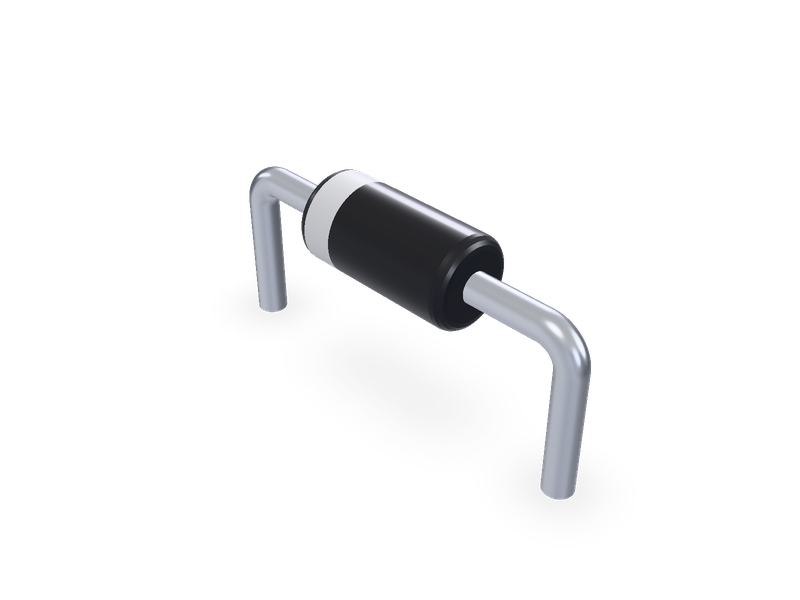
Axial leaded diodes in Vishay's DO-35, DO-41, DO-15, DO-201AD and P600 packages, with the cathode band, horizontal or vertical.
| 1 | """Axial leaded diode, Vishay's DO-35 (DO-204AH), DO-41 (DO-204AL), DO-15 (DO-204AC), DO-201AD and P600 packages, mounted horizontal or |
| 2 | vertical. Lead 1, the cathode, is at the origin and lead 2, the anode, at +X by the pitch; the leads go down through the board. Horizontal: the |
| 3 | body lies on the board along X, centred between the leads, its cathode band toward lead 1. Vertical: the body stands on the board over lead 1 |
| 4 | with the anode up (or over lead 2 with the cathode up) and the top lead comes back down beside it. Dimensions from Vishay's data sheets, |
| 5 | listed in the README.""" |
| 6 | import math |
| 7 | |
| 8 | from steve import Model |
| 9 | |
| 10 | package = "DO-41" # DO-35, DO-41, DO-15, DO-201AD or P600 |
| 11 | mounting = "horizontal" # horizontal or vertical |
| 12 | pitch = 10.16 # mm Lead pitch on the board |
| 13 | up = "anode" # vertical only: the end on top, anode (the body over lead 1) or cathode (the body over lead 2) |
| 14 | tail = 3.0 # mm Leads below the board |
| 15 | detail = "full" # full: body, cathode band and leads; simple: the body only |
| 16 | |
| 17 | # Each entry: (body diameter (min, max), body length (min, max), lead diameter (min, max)), mm; the model uses the middle of each range (a |
| 18 | # single value where the sheet gives only a maximum). The sheets' "PACKAGE OUTLINE DIMENSIONS" drawings: |
| 19 | # DO-35 (DO-204AH): Vishay Semiconductors 1N4148, document 81857, Rev. 1.6, 07-Nov-2024, page 3: Ø 1.5 to 1.75, length 3.4 max, lead 0.55 max. |
| 20 | # DO-41 (DO-204AL): Vishay General Semiconductor 1N4001 thru 1N4007, document 88503, revision 29-Apr-2020, page 4. |
| 21 | # DO-15 (DO-204AC): Vishay General Semiconductor P6KE6.8A thru P6KE540A, document 88369, revision 27-Sep-2021, page 5. |
| 22 | # DO-201AD: Vishay General Semiconductor 1N5400 thru 1N5408, document 88516, revision 19-Dec-2025, page 4. |
| 23 | # P600: Vishay General Semiconductor P600A thru P600M, document 88692, revision 19-Dec-2025, page 3. |
| 24 | PACKAGES = { |
| 25 | "DO-35": ((1.5, 1.75), (3.4, 3.4), (0.55, 0.55)), |
| 26 | "DO-41": ((2.0, 2.7), (4.1, 5.2), (0.71, 0.86)), |
| 27 | "DO-15": ((3.3, 3.5), (6.15, 6.55), (0.71, 0.86)), |
| 28 | "DO-201AD": ((4.8, 5.3), (7.2, 9.5), (1.22, 1.32)), |
| 29 | "P600": ((8.6, 9.1), (8.6, 9.1), (1.22, 1.32)), |
| 30 | } |
| 31 | |
| 32 | if package not in PACKAGES: |
| 33 | raise ValueError(f"no package {package!r}: {', '.join(PACKAGES)}") |
| 34 | if mounting not in ("horizontal", "vertical") or up not in ("anode", "cathode"): |
| 35 | raise ValueError("mounting: horizontal or vertical; up: anode or cathode") |
| 36 | diameter, length, lead = (sum(v) / 2 for v in PACKAGES[package]) |
| 37 | R, r = diameter / 2, lead / 2 |
| 38 | glass = package == "DO-35" |
| 39 | # Proportions, for looks (the sheets draw the body but dimension only its diameter and length): the body's end edges rounded by 0.25 x the |
| 40 | # radius (DO-35 glass: 0.45 x); the cathode band 0.18 x the length wide, starting at the cathode end's rounding; the leads bent with a radius |
| 41 | # of one lead diameter; vertical: the top lead clears the body's top end by 2 lead diameters + 1 before it turns down. |
| 42 | EDGE = (0.45 if glass else 0.25) * R |
| 43 | BAND = 0.18 * length |
| 44 | BEND = lead |
| 45 | LOOP = 2 * lead + 1.0 |
| 46 | horizontal = mounting == "horizontal" |
| 47 | if horizontal and pitch < length + 2 * BEND: |
| 48 | raise ValueError(f"horizontal pitch: at least {length + 2 * BEND:.2f} mm for {package} (body {length:.2f} long, bends {BEND:.2f})") |
| 49 | if not horizontal and pitch < max(R + r, 2 * BEND): |
| 50 | raise ValueError(f"vertical pitch must let the top lead pass the body: at least {max(R + r, 2 * BEND):.2f} mm for {package}") |
| 51 | |
| 52 | |
| 53 | def body_profile(): |
| 54 | """The body outline as (u along the axis from the cathode end, radius) and the band segment's index.""" |
| 55 | pts = [(0.0, 0.0), (0.0, R - EDGE)] |
| 56 | pts += [(EDGE * (1 - math.cos(math.pi / 2 * i / 4)), R - EDGE + EDGE * math.sin(math.pi / 2 * i / 4)) for i in range(1, 5)] |
| 57 | pts.append((EDGE + BAND, R)) |
| 58 | band = len(pts) - 2 |
| 59 | pts.append((length - EDGE, R)) |
| 60 | pts += [(length - u, v) for u, v in reversed(pts[1:5])] |
| 61 | pts.append((length, 0.0)) |
| 62 | return pts, band |
| 63 | |
| 64 | |
| 65 | model = Model() |
| 66 | outline, band = body_profile() |
| 67 | if horizontal: |
| 68 | x0 = pitch / 2 - length / 2 |
| 69 | axis_z = R # the body rests on the board |
| 70 | points = [(x0 + u, axis_z + v) for u, v in outline] |
| 71 | axis = ((0, 0, axis_z), (1, 0, 0)) |
| 72 | else: |
| 73 | base = 0.0 if up == "anode" else pitch # the lead the body stands over |
| 74 | # Cathode at the bottom when the anode is up: u runs up from the cathode end; else down from the top. |
| 75 | points = [(base + v, u if up == "anode" else length - u) for u, v in outline] |
| 76 | axis = ((base, 0, 0), (0, 0, 1)) |
| 77 | with model.sketch("body_sketch", on="XZ", name="Body") as sk: |
| 78 | sk.polyline("body_outline", points, closed=True) |
| 79 | model.revolve("body", "body_sketch", axis=axis, op="new", body="body_body", name="Body") |
| 80 | bodies = ["body_body"] |
| 81 | if detail == "full": |
| 82 | if horizontal: |
| 83 | legs = [(0.0, 1, x0), (pitch, -1, x0 + length)] |
| 84 | for i, (x, side, x_end) in enumerate(legs, 1): |
| 85 | with model.sketch(f"lead_{i}_path", on="XZ", name=f"Lead {i} path") as sk: |
| 86 | sk.line(f"lead_{i}_up", (x, -tail), (x, axis_z - BEND), construction=True) |
| 87 | if side > 0: |
| 88 | sk.arc(f"lead_{i}_bend", (x + BEND, axis_z - BEND), BEND, 90, 180, construction=True) |
| 89 | else: |
| 90 | sk.arc(f"lead_{i}_bend", (x - BEND, axis_z - BEND), BEND, 0, 90, construction=True) |
| 91 | sk.line(f"lead_{i}_along", (x + side * BEND, axis_z), (x_end, axis_z), construction=True) |
| 92 | model.plane(f"lead_{i}_start", on="XY", offset=-tail, name=f"Lead {i} end") |
| 93 | with model.sketch(f"lead_{i}_section", on=f"lead_{i}_start", name=f"Lead {i}") as sk: |
| 94 | sk.circle(f"lead_{i}_round", (x, 0), r) |
| 95 | model.sweep(f"lead_{i}", f"lead_{i}_section", f"lead_{i}_path", op="new", body=f"lead_{i}_body", name=f"Lead {i}") |
| 96 | bodies.append(f"lead_{i}_body") |
| 97 | else: |
| 98 | far = pitch if up == "anode" else 0.0 # where the top lead comes down |
| 99 | step = 1 if far > base else -1 |
| 100 | model.plane("lead_low_start", on="XY", offset=-tail, name="Bottom lead end") |
| 101 | with model.sketch("lead_low_section", on="lead_low_start", name="Bottom lead") as sk: |
| 102 | sk.circle("lead_low_round", (base, 0), r) |
| 103 | model.extrude("lead_low", "lead_low_section", distance=tail, op="new", body="lead_low_body", name="Bottom lead") |
| 104 | top = length + LOOP |
| 105 | with model.sketch("lead_top_path", on="XZ", name="Top lead path") as sk: |
| 106 | sk.line("lead_top_up", (base, length), (base, top - BEND), construction=True) |
| 107 | if step > 0: |
| 108 | sk.arc("lead_top_bend_1", (base + BEND, top - BEND), BEND, 90, 180, construction=True) |
| 109 | sk.line("lead_top_over", (base + BEND, top), (far - BEND, top), construction=True) |
| 110 | sk.arc("lead_top_bend_2", (far - BEND, top - BEND), BEND, 0, 90, construction=True) |
| 111 | else: |
| 112 | sk.arc("lead_top_bend_1", (base - BEND, top - BEND), BEND, 0, 90, construction=True) |
| 113 | sk.line("lead_top_over", (base - BEND, top), (far + BEND, top), construction=True) |
| 114 | sk.arc("lead_top_bend_2", (far + BEND, top - BEND), BEND, 90, 180, construction=True) |
| 115 | sk.line("lead_top_down", (far, top - BEND), (far, -tail), construction=True) |
| 116 | model.plane("lead_top_start", on="XY", offset=length, name="Top lead start") |
| 117 | with model.sketch("lead_top_section", on="lead_top_start", name="Top lead") as sk: |
| 118 | sk.circle("lead_top_round", (base, 0), r) |
| 119 | model.sweep("lead_top", "lead_top_section", "lead_top_path", op="new", body="lead_top_body", name="Top lead") |
| 120 | bodies += ["lead_low_body", "lead_top_body"] |
| 121 | # Materials, for looks and a rough mass: DO-35 is a glass body (the sheet's cathode band is black); the others are moulded epoxy (nylon, PA6, |
| 122 | # the nearest in the list) with a light band ("color band denotes cathode end"); the leads tin-plated copper. |
| 123 | if glass: |
| 124 | model.material("glass-borosilicate", bodies=["body_body"], color="#d98a3a") |
| 125 | else: |
| 126 | model.material("pa6", bodies=["body_body"], color="#202022") |
| 127 | if detail == "full": |
| 128 | model.material("copper", bodies=bodies[1:], color="#c9ccd1") |
| 129 | model.appearance(color="#141414" if glass else "#c8c8c8", faces=[f"body.side(body_outline.side{band})"]) |
| 130 | result = model.result() |
| 131 |
| 1 | name = "steve/axial-diode" |
| 2 | version = "1.0.0" |
| 3 | runtime = "steve" |
| 4 | license = "MIT" |
| 5 | summary = "Axial leaded diodes in Vishay's DO-35, DO-41, DO-15, DO-201AD and P600 packages, with the cathode band, horizontal or vertical." |
| 6 | description = """Axial leaded diode with formed leads, lying on the board or standing up: Vishay's DO-35 (DO-204AH, glass), DO-41 (DO-204AL), DO-15 (DO-204AC), DO-201AD and P600 package outlines, from Vishay's data sheets. Lead 1 (the cathode, by the band) at the origin, lead 2 along +X. See the README.""" |
| 7 | tags = ["diode", "axial", "through-hole", "do-41", "do-35", "do-15", "do-201ad", "p600", "vishay", "electronics"] |
| 8 | |
| 9 | [parameters.package] |
| 10 | type = "choice" |
| 11 | default = "DO-41" |
| 12 | choices = ["DO-35", "DO-41", "DO-15", "DO-201AD", "P600"] |
| 13 | label = "Package" |
| 14 | description = "DO-35: Ø 1.63 x 3.4, glass. DO-41: Ø 2.35 x 4.65. DO-15: Ø 3.4 x 6.35. DO-201AD: Ø 5.05 x 8.35. P600: Ø 8.85 x 8.85." |
| 15 | |
| 16 | [parameters.mounting] |
| 17 | type = "choice" |
| 18 | default = "horizontal" |
| 19 | choices = ["horizontal", "vertical"] |
| 20 | label = "Mounting" |
| 21 | |
| 22 | [parameters.pitch] |
| 23 | type = "number" |
| 24 | default = 10.16 |
| 25 | min = 0.5 |
| 26 | max = 50 |
| 27 | unit = "mm" |
| 28 | label = "Lead pitch" |
| 29 | description = "Horizontal: at least the body length plus two lead diameters. Vertical: enough for the top lead to pass the body." |
| 30 | |
| 31 | [parameters.up] |
| 32 | type = "choice" |
| 33 | default = "anode" |
| 34 | choices = ["anode", "cathode"] |
| 35 | label = "End on top (vertical)" |
| 36 | description = "anode: the body stands over lead 1 (the cathode). cathode: the body stands over lead 2." |
| 37 | |
| 38 | [parameters.tail] |
| 39 | type = "number" |
| 40 | default = 3.0 |
| 41 | min = 0.5 |
| 42 | max = 30 |
| 43 | unit = "mm" |
| 44 | label = "Leads below the board" |
| 45 | |
| 46 | [parameters.detail] |
| 47 | type = "choice" |
| 48 | default = "full" |
| 49 | choices = ["full", "simple"] |
| 50 | label = "Detail" |
| 51 | description = "full: body, cathode band and leads. simple: the body only, for big assemblies." |
| 52 | |
| 53 | [[presets]] |
| 54 | id = "DO-35-H7.62" |
| 55 | title = "DO-35 (DO-204AH) axial diode, horizontal, 7.62 mm pitch" |
| 56 | params = { package = "DO-35", mounting = "horizontal", pitch = 7.62 } |
| 57 | aliases = ["DO-35 diode horizontal 7.62 mm", "DO-35 DO-204AH horizontal", "axial diode DO-35 7.62 mm", "Vishay DO-35 package"] |
| 58 | standard = "Vishay DO-35 (1N4148 sheet)" |
| 59 | |
| 60 | [[presets]] |
| 61 | id = "DO-35-H10.16" |
| 62 | title = "DO-35 (DO-204AH) axial diode, horizontal, 10.16 mm pitch" |
| 63 | params = { package = "DO-35", mounting = "horizontal", pitch = 10.16 } |
| 64 | aliases = ["DO-35 diode horizontal 10.16 mm", "DO-35 DO-204AH horizontal", "axial diode DO-35 10.16 mm", "Vishay DO-35 package"] |
| 65 | standard = "Vishay DO-35 (1N4148 sheet)" |
| 66 | |
| 67 | [[presets]] |
| 68 | id = "DO-35-H12.7" |
| 69 | title = "DO-35 (DO-204AH) axial diode, horizontal, 12.7 mm pitch" |
| 70 | params = { package = "DO-35", mounting = "horizontal", pitch = 12.7 } |
| 71 | aliases = ["DO-35 diode horizontal 12.7 mm", "DO-35 DO-204AH horizontal", "axial diode DO-35 12.7 mm", "Vishay DO-35 package"] |
| 72 | standard = "Vishay DO-35 (1N4148 sheet)" |
| 73 | |
| 74 | [[presets]] |
| 75 | id = "DO-35-VA2.54" |
| 76 | title = "DO-35 (DO-204AH) axial diode, vertical, anode up, 2.54 mm pitch" |
| 77 | params = { package = "DO-35", mounting = "vertical", pitch = 2.54, up = "anode" } |
| 78 | aliases = ["DO-35 diode vertical, anode up 2.54 mm", "DO-35 DO-204AH vertical, anode up", "axial diode DO-35 2.54 mm", "Vishay DO-35 package"] |
| 79 | standard = "Vishay DO-35 (1N4148 sheet)" |
| 80 | |
| 81 | [[presets]] |
| 82 | id = "DO-35-VA5.08" |
| 83 | title = "DO-35 (DO-204AH) axial diode, vertical, anode up, 5.08 mm pitch" |
| 84 | params = { package = "DO-35", mounting = "vertical", pitch = 5.08, up = "anode" } |
| 85 | aliases = ["DO-35 diode vertical, anode up 5.08 mm", "DO-35 DO-204AH vertical, anode up", "axial diode DO-35 5.08 mm", "Vishay DO-35 package"] |
| 86 | standard = "Vishay DO-35 (1N4148 sheet)" |
| 87 | |
| 88 | [[presets]] |
| 89 | id = "DO-35-VK2.54" |
| 90 | title = "DO-35 (DO-204AH) axial diode, vertical, cathode up, 2.54 mm pitch" |
| 91 | params = { package = "DO-35", mounting = "vertical", pitch = 2.54, up = "cathode" } |
| 92 | aliases = ["DO-35 diode vertical, cathode up 2.54 mm", "DO-35 DO-204AH vertical, cathode up", "axial diode DO-35 2.54 mm", "Vishay DO-35 package"] |
| 93 | standard = "Vishay DO-35 (1N4148 sheet)" |
| 94 | |
| 95 | [[presets]] |
| 96 | id = "DO-35-VK5.08" |
| 97 | title = "DO-35 (DO-204AH) axial diode, vertical, cathode up, 5.08 mm pitch" |
| 98 | params = { package = "DO-35", mounting = "vertical", pitch = 5.08, up = "cathode" } |
| 99 | aliases = ["DO-35 diode vertical, cathode up 5.08 mm", "DO-35 DO-204AH vertical, cathode up", "axial diode DO-35 5.08 mm", "Vishay DO-35 package"] |
| 100 | standard = "Vishay DO-35 (1N4148 sheet)" |
| 101 | |
| 102 | [[presets]] |
| 103 | id = "DO-41-H7.62" |
| 104 | title = "DO-41 (DO-204AL) axial diode, horizontal, 7.62 mm pitch" |
| 105 | params = { package = "DO-41", mounting = "horizontal", pitch = 7.62 } |
| 106 | aliases = ["DO-41 diode horizontal 7.62 mm", "DO-41 DO-204AL horizontal", "axial diode DO-41 7.62 mm", "Vishay DO-41 package"] |
| 107 | standard = "Vishay DO-41 (1N4001 sheet)" |
| 108 | |
| 109 | [[presets]] |
| 110 | id = "DO-41-H10.16" |
| 111 | title = "DO-41 (DO-204AL) axial diode, horizontal, 10.16 mm pitch" |
| 112 | params = { package = "DO-41", mounting = "horizontal", pitch = 10.16 } |
| 113 | aliases = ["DO-41 diode horizontal 10.16 mm", "DO-41 DO-204AL horizontal", "axial diode DO-41 10.16 mm", "Vishay DO-41 package"] |
| 114 | standard = "Vishay DO-41 (1N4001 sheet)" |
| 115 | |
| 116 | [[presets]] |
| 117 | id = "DO-41-H12.7" |
| 118 | title = "DO-41 (DO-204AL) axial diode, horizontal, 12.7 mm pitch" |
| 119 | params = { package = "DO-41", mounting = "horizontal", pitch = 12.7 } |
| 120 | aliases = ["DO-41 diode horizontal 12.7 mm", "DO-41 DO-204AL horizontal", "axial diode DO-41 12.7 mm", "Vishay DO-41 package"] |
| 121 | standard = "Vishay DO-41 (1N4001 sheet)" |
| 122 | |
| 123 | [[presets]] |
| 124 | id = "DO-41-VA2.54" |
| 125 | title = "DO-41 (DO-204AL) axial diode, vertical, anode up, 2.54 mm pitch" |
| 126 | params = { package = "DO-41", mounting = "vertical", pitch = 2.54, up = "anode" } |
| 127 | aliases = ["DO-41 diode vertical, anode up 2.54 mm", "DO-41 DO-204AL vertical, anode up", "axial diode DO-41 2.54 mm", "Vishay DO-41 package"] |
| 128 | standard = "Vishay DO-41 (1N4001 sheet)" |
| 129 | |
| 130 | [[presets]] |
| 131 | id = "DO-41-VA5.08" |
| 132 | title = "DO-41 (DO-204AL) axial diode, vertical, anode up, 5.08 mm pitch" |
| 133 | params = { package = "DO-41", mounting = "vertical", pitch = 5.08, up = "anode" } |
| 134 | aliases = ["DO-41 diode vertical, anode up 5.08 mm", "DO-41 DO-204AL vertical, anode up", "axial diode DO-41 5.08 mm", "Vishay DO-41 package"] |
| 135 | standard = "Vishay DO-41 (1N4001 sheet)" |
| 136 | |
| 137 | [[presets]] |
| 138 | id = "DO-41-VK2.54" |
| 139 | title = "DO-41 (DO-204AL) axial diode, vertical, cathode up, 2.54 mm pitch" |
| 140 | params = { package = "DO-41", mounting = "vertical", pitch = 2.54, up = "cathode" } |
| 141 | aliases = ["DO-41 diode vertical, cathode up 2.54 mm", "DO-41 DO-204AL vertical, cathode up", "axial diode DO-41 2.54 mm", "Vishay DO-41 package"] |
| 142 | standard = "Vishay DO-41 (1N4001 sheet)" |
| 143 | |
| 144 | [[presets]] |
| 145 | id = "DO-41-VK5.08" |
| 146 | title = "DO-41 (DO-204AL) axial diode, vertical, cathode up, 5.08 mm pitch" |
| 147 | params = { package = "DO-41", mounting = "vertical", pitch = 5.08, up = "cathode" } |
| 148 | aliases = ["DO-41 diode vertical, cathode up 5.08 mm", "DO-41 DO-204AL vertical, cathode up", "axial diode DO-41 5.08 mm", "Vishay DO-41 package"] |
| 149 | standard = "Vishay DO-41 (1N4001 sheet)" |
| 150 | |
| 151 | [[presets]] |
| 152 | id = "DO-15-H10.16" |
| 153 | title = "DO-15 (DO-204AC) axial diode, horizontal, 10.16 mm pitch" |
| 154 | params = { package = "DO-15", mounting = "horizontal", pitch = 10.16 } |
| 155 | aliases = ["DO-15 diode horizontal 10.16 mm", "DO-15 DO-204AC horizontal", "axial diode DO-15 10.16 mm", "Vishay DO-15 package"] |
| 156 | standard = "Vishay DO-15 (P6KE sheet)" |
| 157 | |
| 158 | [[presets]] |
| 159 | id = "DO-15-H12.7" |
| 160 | title = "DO-15 (DO-204AC) axial diode, horizontal, 12.7 mm pitch" |
| 161 | params = { package = "DO-15", mounting = "horizontal", pitch = 12.7 } |
| 162 | aliases = ["DO-15 diode horizontal 12.7 mm", "DO-15 DO-204AC horizontal", "axial diode DO-15 12.7 mm", "Vishay DO-15 package"] |
| 163 | standard = "Vishay DO-15 (P6KE sheet)" |
| 164 | |
| 165 | [[presets]] |
| 166 | id = "DO-15-H15.24" |
| 167 | title = "DO-15 (DO-204AC) axial diode, horizontal, 15.24 mm pitch" |
| 168 | params = { package = "DO-15", mounting = "horizontal", pitch = 15.24 } |
| 169 | aliases = ["DO-15 diode horizontal 15.24 mm", "DO-15 DO-204AC horizontal", "axial diode DO-15 15.24 mm", "Vishay DO-15 package"] |
| 170 | standard = "Vishay DO-15 (P6KE sheet)" |
| 171 | |
| 172 | [[presets]] |
| 173 | id = "DO-15-VA2.54" |
| 174 | title = "DO-15 (DO-204AC) axial diode, vertical, anode up, 2.54 mm pitch" |
| 175 | params = { package = "DO-15", mounting = "vertical", pitch = 2.54, up = "anode" } |
| 176 | aliases = ["DO-15 diode vertical, anode up 2.54 mm", "DO-15 DO-204AC vertical, anode up", "axial diode DO-15 2.54 mm", "Vishay DO-15 package"] |
| 177 | standard = "Vishay DO-15 (P6KE sheet)" |
| 178 | |
| 179 | [[presets]] |
| 180 | id = "DO-15-VA5.08" |
| 181 | title = "DO-15 (DO-204AC) axial diode, vertical, anode up, 5.08 mm pitch" |
| 182 | params = { package = "DO-15", mounting = "vertical", pitch = 5.08, up = "anode" } |
| 183 | aliases = ["DO-15 diode vertical, anode up 5.08 mm", "DO-15 DO-204AC vertical, anode up", "axial diode DO-15 5.08 mm", "Vishay DO-15 package"] |
| 184 | standard = "Vishay DO-15 (P6KE sheet)" |
| 185 | |
| 186 | [[presets]] |
| 187 | id = "DO-15-VK2.54" |
| 188 | title = "DO-15 (DO-204AC) axial diode, vertical, cathode up, 2.54 mm pitch" |
| 189 | params = { package = "DO-15", mounting = "vertical", pitch = 2.54, up = "cathode" } |
| 190 | aliases = ["DO-15 diode vertical, cathode up 2.54 mm", "DO-15 DO-204AC vertical, cathode up", "axial diode DO-15 2.54 mm", "Vishay DO-15 package"] |
| 191 | standard = "Vishay DO-15 (P6KE sheet)" |
| 192 | |
| 193 | [[presets]] |
| 194 | id = "DO-15-VK5.08" |
| 195 | title = "DO-15 (DO-204AC) axial diode, vertical, cathode up, 5.08 mm pitch" |
| 196 | params = { package = "DO-15", mounting = "vertical", pitch = 5.08, up = "cathode" } |
| 197 | aliases = ["DO-15 diode vertical, cathode up 5.08 mm", "DO-15 DO-204AC vertical, cathode up", "axial diode DO-15 5.08 mm", "Vishay DO-15 package"] |
| 198 | standard = "Vishay DO-15 (P6KE sheet)" |
| 199 | |
| 200 | [[presets]] |
| 201 | id = "DO-201AD-H12.7" |
| 202 | title = "DO-201AD (DO-201AD) axial diode, horizontal, 12.7 mm pitch" |
| 203 | params = { package = "DO-201AD", mounting = "horizontal", pitch = 12.7 } |
| 204 | aliases = ["DO-201AD diode horizontal 12.7 mm", "DO-201AD DO-201AD horizontal", "axial diode DO-201AD 12.7 mm", "Vishay DO-201AD package"] |
| 205 | standard = "Vishay DO-201AD (1N5400 sheet)" |
| 206 | |
| 207 | [[presets]] |
| 208 | id = "DO-201AD-H15.24" |
| 209 | title = "DO-201AD (DO-201AD) axial diode, horizontal, 15.24 mm pitch" |
| 210 | params = { package = "DO-201AD", mounting = "horizontal", pitch = 15.24 } |
| 211 | aliases = ["DO-201AD diode horizontal 15.24 mm", "DO-201AD DO-201AD horizontal", "axial diode DO-201AD 15.24 mm", "Vishay DO-201AD package"] |
| 212 | standard = "Vishay DO-201AD (1N5400 sheet)" |
| 213 | |
| 214 | [[presets]] |
| 215 | id = "DO-201AD-VA5.08" |
| 216 | title = "DO-201AD (DO-201AD) axial diode, vertical, anode up, 5.08 mm pitch" |
| 217 | params = { package = "DO-201AD", mounting = "vertical", pitch = 5.08, up = "anode" } |
| 218 | aliases = ["DO-201AD diode vertical, anode up 5.08 mm", "DO-201AD DO-201AD vertical, anode up", "axial diode DO-201AD 5.08 mm", "Vishay DO-201AD package"] |
| 219 | standard = "Vishay DO-201AD (1N5400 sheet)" |
| 220 | |
| 221 | [[presets]] |
| 222 | id = "DO-201AD-VK5.08" |
| 223 | title = "DO-201AD (DO-201AD) axial diode, vertical, cathode up, 5.08 mm pitch" |
| 224 | params = { package = "DO-201AD", mounting = "vertical", pitch = 5.08, up = "cathode" } |
| 225 | aliases = ["DO-201AD diode vertical, cathode up 5.08 mm", "DO-201AD DO-201AD vertical, cathode up", "axial diode DO-201AD 5.08 mm", "Vishay DO-201AD package"] |
| 226 | standard = "Vishay DO-201AD (1N5400 sheet)" |
| 227 | |
| 228 | [[presets]] |
| 229 | id = "P600-H12.7" |
| 230 | title = "P600 (R-6) axial diode, horizontal, 12.7 mm pitch" |
| 231 | params = { package = "P600", mounting = "horizontal", pitch = 12.7 } |
| 232 | aliases = ["P600 diode horizontal 12.7 mm", "P600 R-6 horizontal", "axial diode P600 12.7 mm", "Vishay P600 package"] |
| 233 | standard = "Vishay P600 (P600A sheet)" |
| 234 | |
| 235 | [[presets]] |
| 236 | id = "P600-H20" |
| 237 | title = "P600 (R-6) axial diode, horizontal, 20 mm pitch" |
| 238 | params = { package = "P600", mounting = "horizontal", pitch = 20 } |
| 239 | aliases = ["P600 diode horizontal 20 mm", "P600 R-6 horizontal", "axial diode P600 20 mm", "Vishay P600 package"] |
| 240 | standard = "Vishay P600 (P600A sheet)" |
| 241 | |
| 242 | [[presets]] |
| 243 | id = "P600-VA7.62" |
| 244 | title = "P600 (R-6) axial diode, vertical, anode up, 7.62 mm pitch" |
| 245 | params = { package = "P600", mounting = "vertical", pitch = 7.62, up = "anode" } |
| 246 | aliases = ["P600 diode vertical, anode up 7.62 mm", "P600 R-6 vertical, anode up", "axial diode P600 7.62 mm", "Vishay P600 package"] |
| 247 | standard = "Vishay P600 (P600A sheet)" |
| 248 | |
| 249 | [[presets]] |
| 250 | id = "P600-VK7.62" |
| 251 | title = "P600 (R-6) axial diode, vertical, cathode up, 7.62 mm pitch" |
| 252 | params = { package = "P600", mounting = "vertical", pitch = 7.62, up = "cathode" } |
| 253 | aliases = ["P600 diode vertical, cathode up 7.62 mm", "P600 R-6 vertical, cathode up", "axial diode P600 7.62 mm", "Vishay P600 package"] |
| 254 | standard = "Vishay P600 (P600A sheet)" |
| 255 | |
| 256 | [[presets]] |
| 257 | id = "DO-41-H10.16-simple" |
| 258 | title = "DO-41 (DO-204AL) axial diode, horizontal, 10.16 mm pitch, simple" |
| 259 | params = { package = "DO-41", mounting = "horizontal", pitch = 10.16, detail = "simple" } |
| 260 | aliases = ["DO-41 diode simple"] |
| 261 | standard = "Vishay DO-41 (1N4001 sheet)" |
| 262 |
An axial leaded diode with formed leads, lying on the board or standing up. The package outlines are Vishay's: DO-35 (DO-204AH, a glass body), DO-41 (DO-204AL), DO-15 (DO-204AC), DO-201AD and P600, each from a Vishay data sheet.
Lead 1, the cathode at the band, is at the origin. Lead 2, the anode, is at +X by pitch, and both leads go down through the board, tail below it.
up = "anode" it stands over lead 1, and with up = "cathode" over lead 2. The top lead clears the body's top, turns over and comes back down at the other hole.| Package | Body Ø | Body length | Lead Ø | Sheet |
|---|---|---|---|---|
| DO-35 (DO-204AH) | 1.5–1.75 | 3.4 max | 0.55 max | 1N4148 |
| DO-41 (DO-204AL) | 2.0–2.7 | 4.1–5.2 | 0.71–0.86 | 1N4001 |
| DO-15 (DO-204AC) | 3.3–3.5 | 6.15–6.55 | 0.71–0.86 | P6KE6.8A |
| DO-201AD | 4.8–5.3 | 7.2–9.5 | 1.22–1.32 | 1N5400 |
| P600 | 8.6–9.1 | 8.6–9.1 | 1.22–1.32 | P600A |
The part uses the middle of each range. Where the sheet gives only a maximum (DO-35's length and lead), it uses that value.
Vishay data sheets, from vishay.com:
The moulded packages carry a colour band at the cathode end ("color band denotes cathode end"). The leads are 25.4 min long before forming.
Proportions, for looks only. The sheets draw the body but dimension only its diameter and length:
The catalogue's D_<package>_P<pitch>mm_<Horizontal|Vertical_AnodeUp|Vertical_CathodeUp> models name a JEDEC package (or the P600 / R-6 case) and a pitch, and 29 of them map.
On the reference models, lead 1 is at the origin. A horizontal body lies between the leads. A vertical body stands over lead 1 when the anode is up and over lead 2 when the cathode is up. The pitch is the named one.
Measured on six reference models (body Ø x length, lead Ø):
| Model | Measured | Vishay's sheet |
|---|---|---|
| DO-41 P7.62 horizontal | 2.72 x 5.2, 0.80 | 2.0–2.7 x 4.1–5.2, 0.71–0.86 |
| DO-35 P7.62 horizontal | 2.02 x 4.0, 0.50 | 1.5–1.75 x 3.4 max, 0.55 max |
| DO-15 P10.16 horizontal | 3.62 x 7.6, 0.90 | 3.3–3.5 x 6.15–6.55, 0.71–0.86 |
| DO-201AD P12.70 horizontal | 5.22 x 9.5, 1.30 | 4.8–5.3 x 7.2–9.5, 1.22–1.32 |
| P600 P12.70 horizontal | 9.12 x 9.1, 1.30 | 8.6–9.1 x 8.6–9.1, 1.22–1.32 |
| DO-41 P2.54 vertical, anode up / cathode up | 2.72 x 5.2 | as above |
The models are drawn at or beyond the largest body that each package allows. The DO-35 and DO-15 models are larger than Vishay's maximums: the DO-35 by 0.27 in diameter and 0.6 in length, and the DO-15 by 0.12 in diameter and 1.05 in length.
The names name the package, so they map to Vishay's outline of that package, and the pitch and lead order are as named. The bodies lie on the board, where the models raise them about 0.6.
Left as "no table read yet" until a sheet is read: 5KP, 5KPW, 5W, A-405, DO-201, DO-201AE, DO-27, DO-34, T-1, DO-247 and the bridge rectifiers.
| 1 | # Axial diode |
| 2 | |
| 3 | An axial leaded diode with formed leads, lying on the board or standing up. The package outlines are Vishay's: DO-35 (DO-204AH, a glass body), DO-41 (DO-204AL), DO-15 (DO-204AC), DO-201AD and P600, each from a Vishay data sheet. |
| 4 | |
| 5 | Lead 1, the cathode at the band, is at the origin. Lead 2, the anode, is at +X by `pitch`, and both leads go down through the board, `tail` below it. |
| 6 | |
| 7 | - **Horizontal.** The body lies on the board along X, centred between the leads, with its band toward lead 1. |
| 8 | - **Vertical.** The body stands on the board. With `up = "anode"` it stands over lead 1, and with `up = "cathode"` over lead 2. The top lead clears the body's top, turns over and comes back down at the other hole. |
| 9 | |
| 10 | | Package | Body Ø | Body length | Lead Ø | Sheet | |
| 11 | |---|---|---|---|---| |
| 12 | | DO-35 (DO-204AH) | 1.5–1.75 | 3.4 max | 0.55 max | 1N4148 | |
| 13 | | DO-41 (DO-204AL) | 2.0–2.7 | 4.1–5.2 | 0.71–0.86 | 1N4001 | |
| 14 | | DO-15 (DO-204AC) | 3.3–3.5 | 6.15–6.55 | 0.71–0.86 | P6KE6.8A | |
| 15 | | DO-201AD | 4.8–5.3 | 7.2–9.5 | 1.22–1.32 | 1N5400 | |
| 16 | | P600 | 8.6–9.1 | 8.6–9.1 | 1.22–1.32 | P600A | |
| 17 | |
| 18 | The part uses the middle of each range. Where the sheet gives only a maximum (DO-35's length and lead), it uses that value. |
| 19 | |
| 20 | ## Source |
| 21 | |
| 22 | Vishay data sheets, from vishay.com: |
| 23 | |
| 24 | - Vishay Semiconductors, **1N4148**, document 81857, Rev. 1.6, 07-Nov-2024, page 3, "PACKAGE DIMENSIONS in millimeters (inches): DO-35 (DO-204AH)". The cathode band is black, according to page 1. |
| 25 | - Vishay General Semiconductor, **1N4001 thru 1N4007**, document 88503, revision 29-Apr-2020, page 4, "PACKAGE OUTLINE DIMENSIONS: DO-41 (DO-204AL)". |
| 26 | - Vishay General Semiconductor, **P6KE6.8A thru P6KE540A**, document 88369, revision 27-Sep-2021, page 5, "DO-15 (DO-204AC)". |
| 27 | - Vishay General Semiconductor, **1N5400 thru 1N5408**, document 88516, revision 19-Dec-2025, page 4, "DO-201AD". |
| 28 | - Vishay General Semiconductor, **P600A thru P600M**, document 88692, revision 19-Dec-2025, page 3, "P600". |
| 29 | |
| 30 | The moulded packages carry a colour band at the cathode end ("color band denotes cathode end"). The leads are 25.4 min long before forming. |
| 31 | |
| 32 | **Proportions, for looks only.** The sheets draw the body but dimension only its diameter and length: |
| 33 | |
| 34 | - The body's end edges are rounded by 0.25 x the radius, or 0.45 x on the DO-35's glass. |
| 35 | - The cathode band is 0.18 x the length wide, starting at the cathode end's rounding. |
| 36 | - The leads are bent with a radius of one lead diameter. On a vertical part, the top lead rises 2 lead diameters + 1 above the body before it turns. |
| 37 | - Materials are for looks and a rough mass: |
| 38 | - DO-35 is borosilicate glass in amber, with a black band. |
| 39 | - The moulded packages are epoxy. Nylon (PA6) is the nearest in the list. They are black with a light band. |
| 40 | - The leads are tin-plated copper. |
| 41 | |
| 42 | ## Catalogue models |
| 43 | |
| 44 | The catalogue's `D_<package>_P<pitch>mm_<Horizontal|Vertical_AnodeUp|Vertical_CathodeUp>` models name a JEDEC package (or the P600 / R-6 case) and a pitch, and 29 of them map. |
| 45 | |
| 46 | On the reference models, lead 1 is at the origin. A horizontal body lies between the leads. A vertical body stands over lead 1 when the anode is up and over lead 2 when the cathode is up. The pitch is the named one. |
| 47 | |
| 48 | Measured on six reference models (body Ø x length, lead Ø): |
| 49 | |
| 50 | | Model | Measured | Vishay's sheet | |
| 51 | |---|---|---| |
| 52 | | DO-41 P7.62 horizontal | 2.72 x 5.2, 0.80 | 2.0–2.7 x 4.1–5.2, 0.71–0.86 | |
| 53 | | DO-35 P7.62 horizontal | 2.02 x 4.0, 0.50 | 1.5–1.75 x 3.4 max, 0.55 max | |
| 54 | | DO-15 P10.16 horizontal | 3.62 x 7.6, 0.90 | 3.3–3.5 x 6.15–6.55, 0.71–0.86 | |
| 55 | | DO-201AD P12.70 horizontal | 5.22 x 9.5, 1.30 | 4.8–5.3 x 7.2–9.5, 1.22–1.32 | |
| 56 | | P600 P12.70 horizontal | 9.12 x 9.1, 1.30 | 8.6–9.1 x 8.6–9.1, 1.22–1.32 | |
| 57 | | DO-41 P2.54 vertical, anode up / cathode up | 2.72 x 5.2 | as above | |
| 58 | |
| 59 | The models are drawn at or beyond the largest body that each package allows. The DO-35 and DO-15 models are larger than Vishay's maximums: the DO-35 by 0.27 in diameter and 0.6 in length, and the DO-15 by 0.12 in diameter and 1.05 in length. |
| 60 | |
| 61 | The names name the package, so they map to Vishay's outline of that package, and the pitch and lead order are as named. The bodies lie on the board, where the models raise them about 0.6. |
| 62 | |
| 63 | Left as "no table read yet" until a sheet is read: 5KP, 5KPW, 5W, A-405, DO-201, DO-201AE, DO-27, DO-34, T-1, DO-247 and the bridge rectifiers. |
| 64 |
Axial leaded diode with formed leads, lying on the board or standing up: Vishay's DO-35 (DO-204AH, glass), DO-41 (DO-204AL), DO-15 (DO-204AC), DO-201AD and P600 package outlines, from Vishay's data sheets. Lead 1 (the cathode, by the band) at the origin, lead 2 along +X. See the README.
An axial leaded diode with formed leads, lying on the board or standing up. The package outlines are Vishay's: DO-35 (DO-204AH, a glass body), DO-41 (DO-204AL), DO-15 (DO-204AC), DO-201AD and P600, each from a Vishay data sheet.
Lead 1, the cathode at the band, is at the origin. Lead 2, the anode, is at +X by pitch, and both leads go down through the board, tail below it.
up = "anode" it stands over lead 1, and with up = "cathode" over lead 2. The top lead clears the body's top, turns over and comes back down at the other hole.| Package | Body Ø | Body length | Lead Ø | Sheet |
|---|---|---|---|---|
| DO-35 (DO-204AH) | 1.5–1.75 | 3.4 max | 0.55 max | 1N4148 |
| DO-41 (DO-204AL) | 2.0–2.7 | 4.1–5.2 | 0.71–0.86 | 1N4001 |
| DO-15 (DO-204AC) | 3.3–3.5 | 6.15–6.55 | 0.71–0.86 | P6KE6.8A |
| DO-201AD | 4.8–5.3 | 7.2–9.5 | 1.22–1.32 | 1N5400 |
| P600 | 8.6–9.1 | 8.6–9.1 | 1.22–1.32 | P600A |
The part uses the middle of each range. Where the sheet gives only a maximum (DO-35's length and lead), it uses that value.
Vishay data sheets, from vishay.com:
The moulded packages carry a colour band at the cathode end ("color band denotes cathode end"). The leads are 25.4 min long before forming.
Proportions, for looks only. The sheets draw the body but dimension only its diameter and length:
The catalogue's D_<package>_P<pitch>mm_<Horizontal|Vertical_AnodeUp|Vertical_CathodeUp> models name a JEDEC package (or the P600 / R-6 case) and a pitch, and 29 of them map.
On the reference models, lead 1 is at the origin. A horizontal body lies between the leads. A vertical body stands over lead 1 when the anode is up and over lead 2 when the cathode is up. The pitch is the named one.
Measured on six reference models (body Ø x length, lead Ø):
| Model | Measured | Vishay's sheet |
|---|---|---|
| DO-41 P7.62 horizontal | 2.72 x 5.2, 0.80 | 2.0–2.7 x 4.1–5.2, 0.71–0.86 |
| DO-35 P7.62 horizontal | 2.02 x 4.0, 0.50 | 1.5–1.75 x 3.4 max, 0.55 max |
| DO-15 P10.16 horizontal | 3.62 x 7.6, 0.90 | 3.3–3.5 x 6.15–6.55, 0.71–0.86 |
| DO-201AD P12.70 horizontal | 5.22 x 9.5, 1.30 | 4.8–5.3 x 7.2–9.5, 1.22–1.32 |
| P600 P12.70 horizontal | 9.12 x 9.1, 1.30 | 8.6–9.1 x 8.6–9.1, 1.22–1.32 |
| DO-41 P2.54 vertical, anode up / cathode up | 2.72 x 5.2 | as above |
The models are drawn at or beyond the largest body that each package allows. The DO-35 and DO-15 models are larger than Vishay's maximums: the DO-35 by 0.27 in diameter and 0.6 in length, and the DO-15 by 0.12 in diameter and 1.05 in length.
The names name the package, so they map to Vishay's outline of that package, and the pitch and lead order are as named. The bodies lie on the board, where the models raise them about 0.6.
Left as "no table read yet" until a sheet is read: 5KP, 5KPW, 5W, A-405, DO-201, DO-201AE, DO-27, DO-34, T-1, DO-247 and the bridge rectifiers.
Axial leaded inductor, Fastron fixed choke coils (MICC, SMCC, MECC, HCCC, LACC, HBCC, VHBCC, XHBCC) and suppression coils (MISC, MESC, 77A), Vishay Dale molded IM-1 to IM-10, horizontal or vertical.
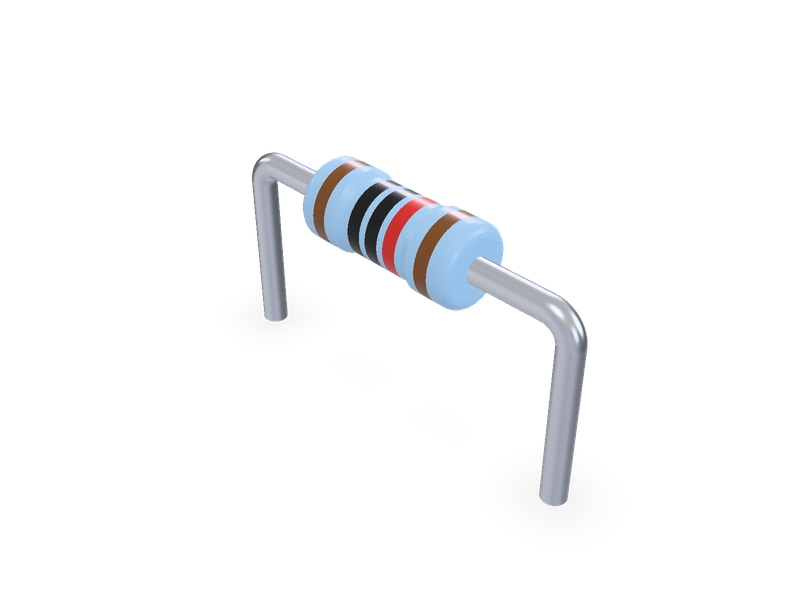
Axial leaded metal film resistor, Vishay Beyschlag MBA/SMA 0204, MBB/SMA 0207 and MBE/SMA 0414, with colour rings, horizontal or vertical.
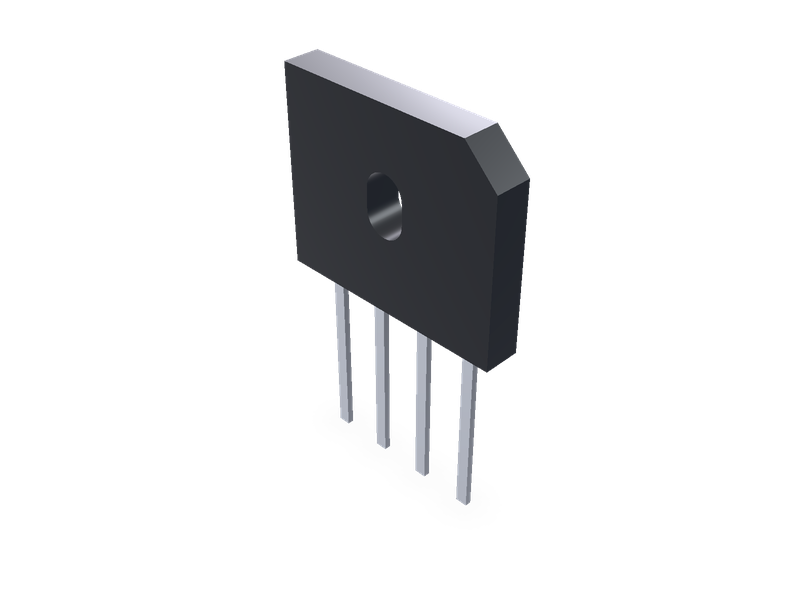
Single-phase bridge rectifiers in Vishay's through-hole cases: GBL, GBU, KBL and KBU in-line, KBPC1 and KBPC6 square, from Vishay's data sheets.
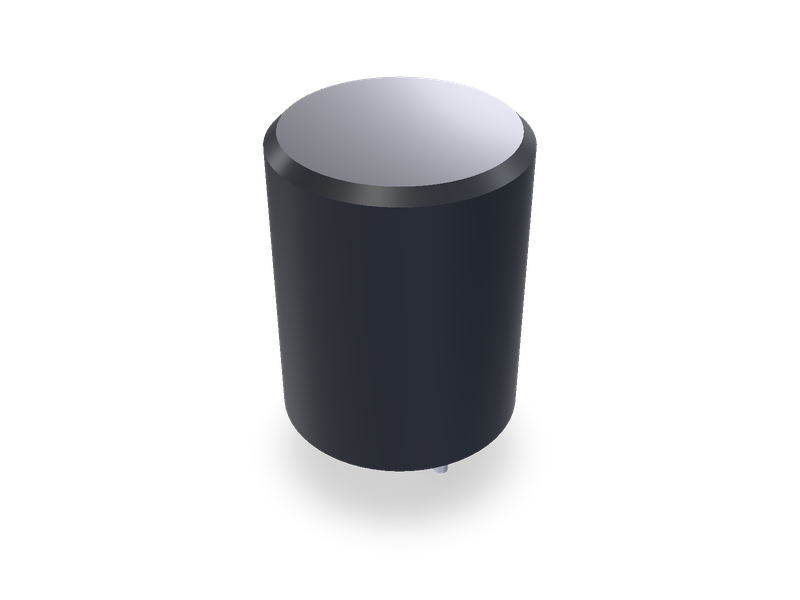
Radial leaded inductor, Fastron pin type coils: 07M shielded, 07P and 11P with tube, 07HCP, 09HCP and 07HVP open or with tube.